
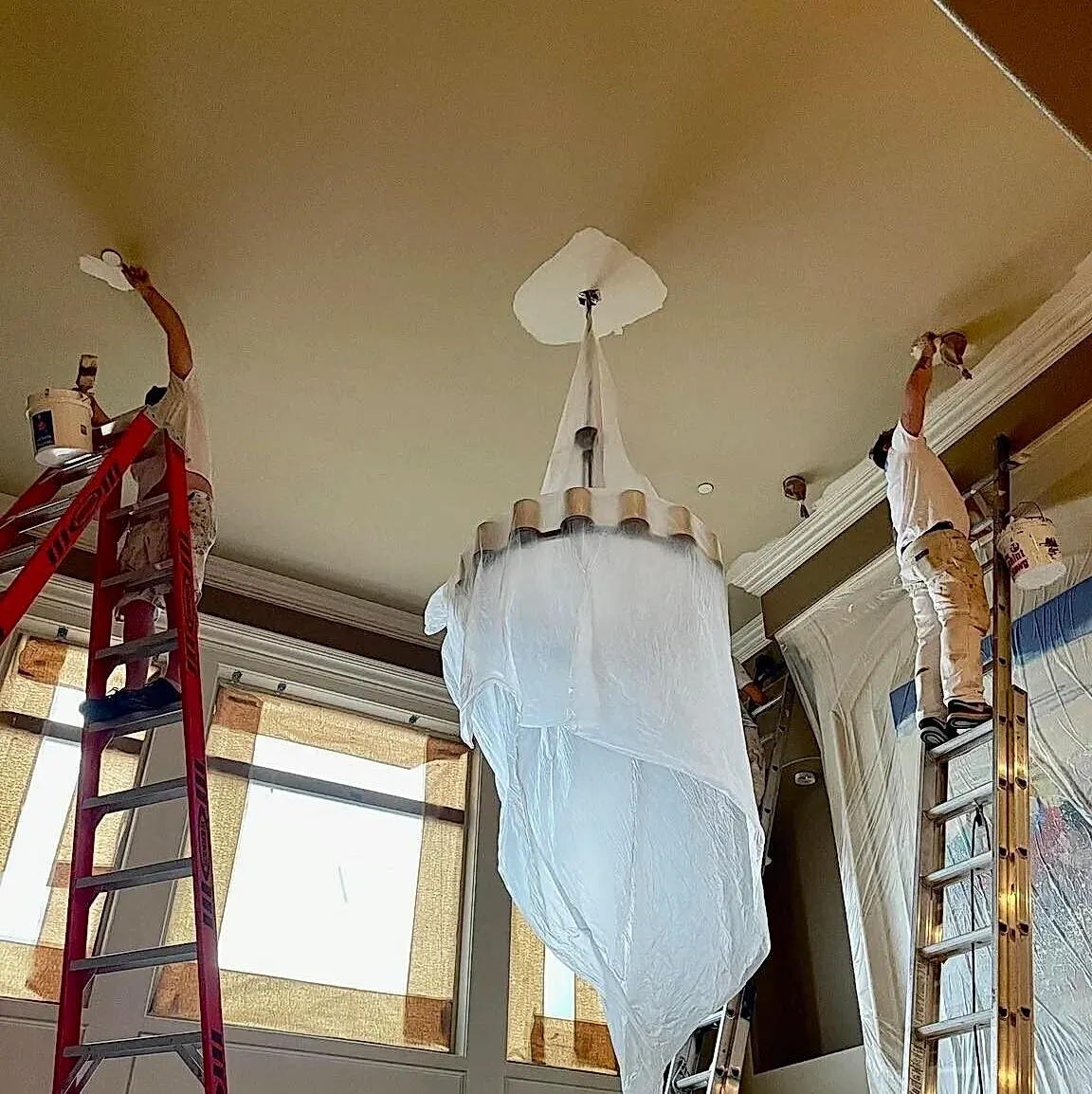
Interior Painting of an Older Tacoma Home: Plaster, Old Trim, and Lead-Safe Work
Tacoma has a lot of old houses. Craftsman bungalows in the North End, foursquares in the Stadium District, post-war ranches all over Lakewood and University Place. They’ve got character, and they’ve also got layers. Plaster instead of drywall. Trim that’s been painted with oil, then latex, then oil again. And in plenty of them, lead paint somewhere under all of it.
Winter is a good time to tackle these rooms. You’re inside anyway, and our crews have more room on the schedule for interior painting. But an older house needs a different approach than a 2005 tract home, and that’s what this post is about.
Is it safe to paint inside a house built before 1978?
Yes, as long as whoever does the work follows lead-safe practices. If your home was built before 1978, assume there’s lead paint somewhere until a test says otherwise. Painting over intact lead paint isn’t the risk. Sanding, scraping, or cutting into it is, because that’s what makes dust.
Federal rules require any contractor disturbing painted surfaces in a pre-1978 home to be EPA lead-safe certified. That means plastic containment, no dry sanding or power planing on lead surfaces, specific cleanup, and a cleaning check before the room is handed back. We’re EPA lead-safe certified, so this is just how we work in older homes.
If you’ve got little kids or someone pregnant in the house, ask any painter you’re considering to show you their certification. It’s a fair question and a good one should answer it without hesitation.
Can you paint over old plaster walls?
You can, and plaster usually takes paint beautifully once it’s prepped. The prep is the whole job, though.
Old plaster cracks. Some cracks are hairline and just need filling. Others mean the plaster is pulling away from the lath behind it, and if you push on the wall and it moves, paint isn’t going to fix that. We look for loose areas, secure or patch them, and fill cracks with products meant to flex a bit, since these houses move with the seasons.
Patched plaster also soaks up paint differently than the original wall. Skip the primer on those spots and you’ll see shiny and dull patches every time the light hits sideways. We spot-prime patches at minimum, and honestly, on a wall with a lot of repair we’d rather prime the whole thing.
Why is my old trim peeling after I painted it?
Almost always, it’s latex paint over old oil-based paint without the right primer. Latex doesn’t grab glossy oil. It looks fine for a few weeks, then peels off in sheets when you bump it or scratch it with a fingernail.
A quick way to check: rub a cotton ball with rubbing alcohol on an out-of-the-way spot. If paint comes off on the cotton, it’s probably latex. If nothing happens, you’re likely dealing with oil. In an older home, that test tells us whether we need a bonding primer before anything else goes on.
On pre-1978 trim, we don’t just sand it down to get a fresh surface. We use lead-safe methods: wet sanding, deglossing, and bonding primers that grip without turning old paint into dust.
Should you strip old woodwork or paint over it?
Our opinion: if the old paint is sound and tight, paint over it. Full stripping in an older house is slow, expensive, and with lead in the mix it’s a much bigger deal than most homeowners expect.
Strip only where you have to. Doors that won’t close because of paint buildup, window sashes painted shut, crown molding where the detail is lost under too many coats. Everywhere else, good prep and a quality enamel will give you crisp, durable trim without tearing the house apart. If something’s damaged past saving, our light carpentry work can replace a short run of trim or rebuild a sill so you’re not painting over rot.
What about the wallpaper under the paint?
Old Tacoma houses love to hide wallpaper. Sometimes two or three layers. Sometimes someone painted right over it decades ago.
If the painted-over paper is stuck down tight, we can often prime with an oil-based or shellac primer and paint over it. Water-based primer can soak in and make the paper bubble. If it’s already lifting at the seams, it needs to come off, and the wall underneath usually needs some skim work. We’ll tell you which situation you’re in at the estimate rather than guessing.
Does winter weather affect painting inside an old house?
A little. Older homes tend to have single-pane windows, cold exterior walls, and more drafts. That means cooler wall surfaces and condensation on windows and sills, which slows drying and can make paint sag or fail on the coldest walls.
We keep the heat on, watch surface temperatures on exterior walls, and wipe down and dry sills before painting them. You’ll want the house heated like normal while we work. Don’t turn the thermostat down to save money that week.
If you’ve got a bathroom with no fan in an older home, that’s the one room we’d flag. Paint can’t outlast a room that stays wet all winter. Honestly, adding a vent fan does more than any paint upgrade.
How do I find a painter who knows older homes?
Ask three things:
- Are you EPA lead-safe certified, and will you show me?
- How will you handle the plaster cracks and the old oil trim?
- What primer are you using, and why?
Painting contractors who work on older homes regularly will answer those specifically. If you hear “we’ll just put two coats on it,” keep looking. For more on vetting painters Tacoma homeowners can trust, see our guide to choosing house painting services.
FAQ
Do I need to move out while you paint a pre-1978 home? Usually not for basic painting over intact surfaces. For rooms with lead-safe prep, we contain the work area and you’ll want to stay out of that room until cleanup is done. We’ll walk through the plan with you first.
Can you test for lead paint? We use lead-safe practices on pre-1978 homes regardless. If you want a formal lead inspection, a certified inspector or risk assessor can do that separately.
Is plaster harder to paint than drywall? The painting isn’t harder. The repair and priming take longer, and that’s where the quality shows.
Do you work in University Place and Lakewood too? Yes. We do residential painting across Tacoma, University Place, Lakewood, Gig Harbor, Puyallup and nearby towns.
Talk to us about your older home
Grit City Painters is PCA accredited and EPA lead-safe certified, and we do interior painting, light carpentry, and cabinet painting for homes of every age around Pierce County. Call (253) 240-6014 or request an estimate online. We get quotes back within 24 hours, and financing is available.


Leave a Reply